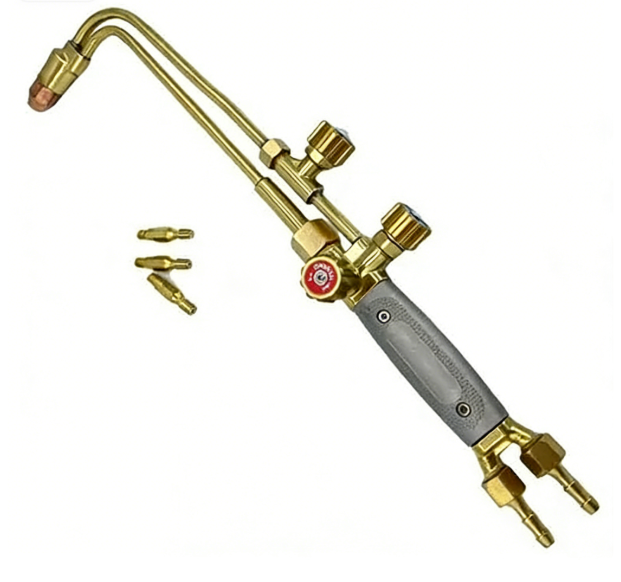
It is well known that ships are extremely large in size, stretching for hundreds of meters, and are extremely complex steel structures. It is impossible to be completely completed by robots on the assembly line like cars. Strong on-site assembly and repair capability. Moreover, a large number of work sites occur in shipyards, docks, and segmented assembly sites, with complex environments and variable locations. So welding and cutting guns have become a commonly used tool in ship maintenance management.

The welding and cutting functions of the welding and cutting gun have become the main working methods. Let’s talk about how the welding and cutting gun tool functions in the shipbuilding industry?
Firstly, let’s talk about the welding function of the welding and cutting gun,
The shells of modern ships are made up of tens of thousands of steel plates and profiles connected by welds. Welding is the only method to endow ships with structural strength and sealing. Welding and cutting guns have become the only way to connect them.
Another reason is that the irregular position of the ship’s structure makes it difficult for workers to handle repairs. The ship’s structure has welds in various positions, including flat, vertical, horizontal, and vertical. It is difficult for automated equipment to cover all locations, especially in ballast tanks and narrow double bottom compartments. There are also complex nodes at the junction of the side and deck, as well as around the base.
And when assembling the huge segments in the dock, the final circular closure seam must be completed by the welder using a welding gun. This needs to be completed by closing the seams on site. During the repair and modification process, it is necessary to cut off the damaged parts and then weld new plates. Due to the irregular shape of the damage, this process heavily relies on the welder’s judgment and manual skills. Welding and cutting guns are essential in these processes
Moreover, the cutting function of welding and cutting guns is also one of the necessary functions in the shipbuilding industry.
During the process of on-site trimming and opening, assembly trimming is usually done by CNC cutting of parts. However, there may be slight dimensional deviations during actual assembly, so workers need to use handheld plasma or flame cutting guns for on-site trimming to ensure assembly clearance.
When installing pipelines, cables, and equipment bases, it is often necessary to drill holes and cut channels on the already installed structures on site. This cannot be fully determined in advance based on the worker’s design drawings, so the flexible use of welding and cutting guns can handle the issue of hole modification flexibly according to the actual situation during this process.
The most obvious application is in the repair or modification of ships. The first step in dismantling work is to use cutting tools to accurately cut off corroded, deformed, or cracked parts, preparing for the subsequent welding of new plates. The flexibility of handheld cutting guns is irreplaceable.
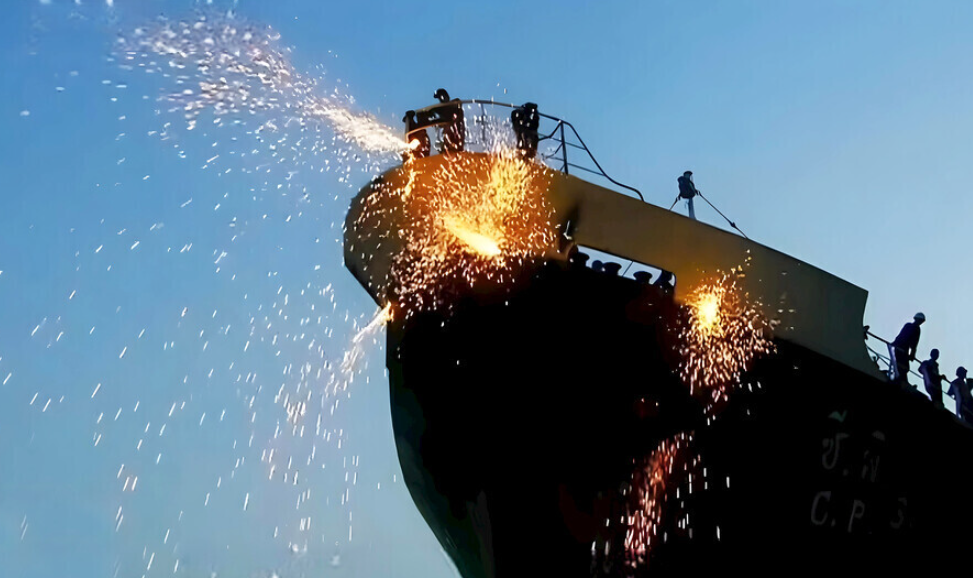
Ship welding and cutting mainly use low-carbon steel/high-strength ship plates (AH36/DH36) as the main material, supplemented by stainless steel (pipelines) and aluminum alloy (high-speed ships). Therefore, the requirements for welding are high strength, good tightness (leak proof/leak proof), and goog looking weld formation. Welding and cutting tools are very suitable for the shipbuilding industry.