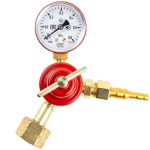
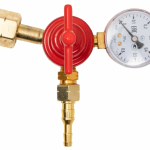
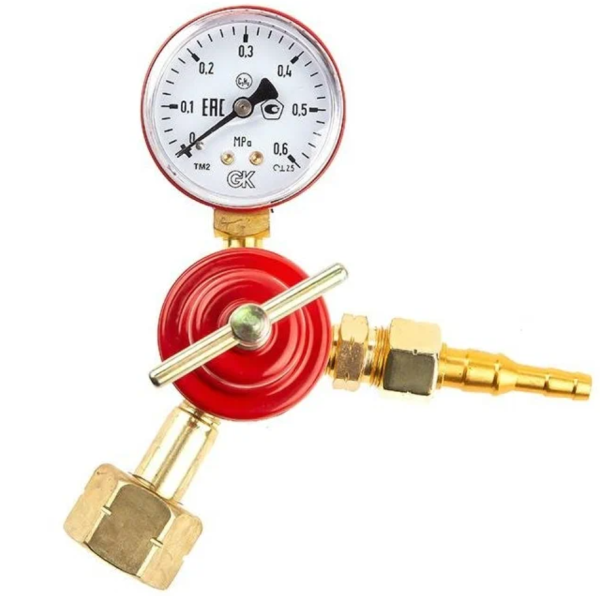
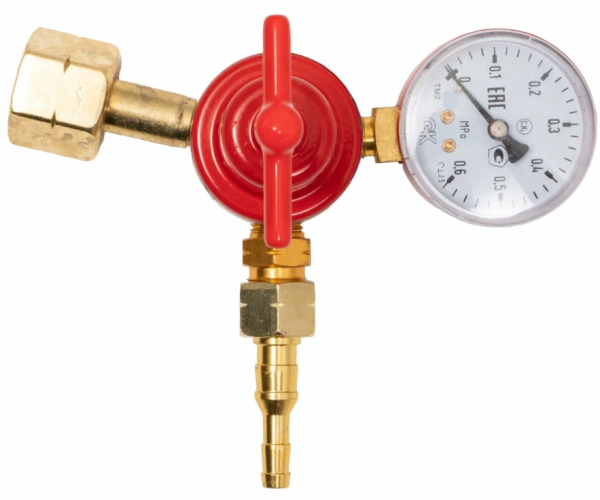
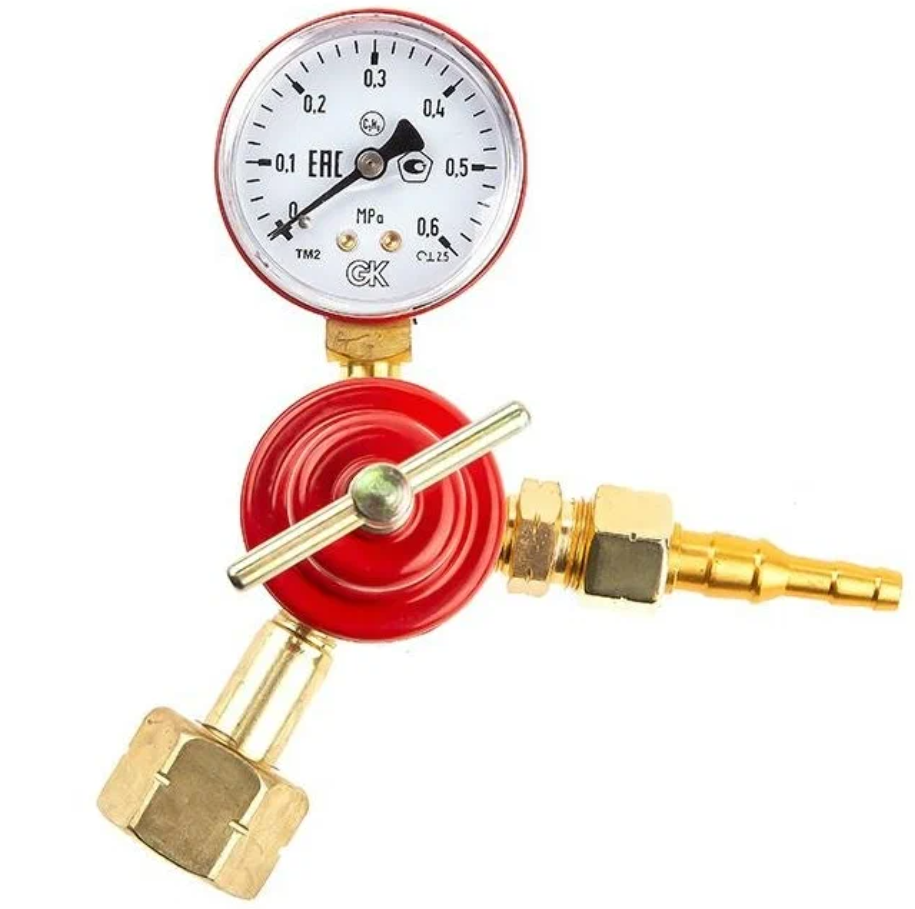
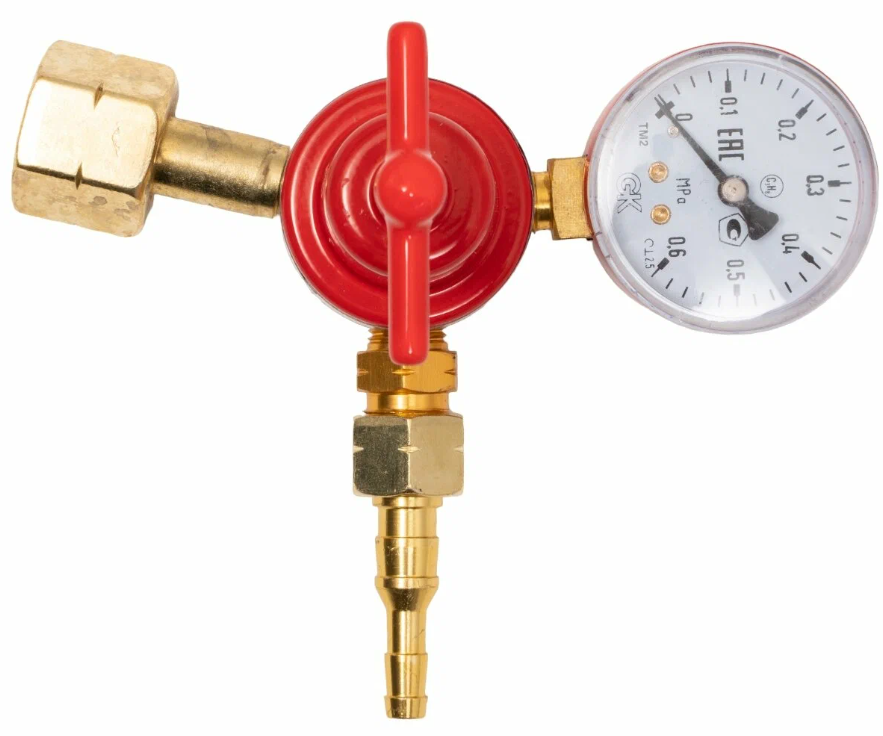
Production plant Propane reducer Promtechkomplet BPO-5-2
Propane gas cylindrical reducer Promtechkomplet BPO-5-2.
Designed for lowering and regulating the pressure of the gas coming from the cylinder, and automatically maintaining the constant level of the working pressure of the gas when feeding posts and installations of gas welding, cutting, soldering, heating and other processes of gas flame treatment.
Type:reducer
Gas Type: Propane
Installation Place:Cylindrical
FAQ:
1. Adjustment knob function of pressure reducer: How to operate the red adjustment knob?
The red knob is the pressure regulating valve:
Clockwise rotation: increase output pressure (flame becomes brighter);
Counter clockwise rotation: reduce output pressure (flame becomes weaker);
Initial state: It is recommended to turn counterclockwise to the bottom (close/minimum pressure) before connecting the cylinder to avoid explosion.
2. Installation steps: How to correctly install the pressure regulator onto the steel cylinder?
Valve closing inspection: Ensure that the cylinder valve (black/silver angle valve in the second picture) is in the closed state;
Cleaning interface: Wipe the outlet of the steel cylinder valve and the inlet of the pressure reducer with a dry cloth to remove impurities;
Connect the pressure regulator: Align the pressure regulator inlet (brass thread/quick connect) vertically with the cylinder valve, rotate clockwise and tighten (or clip in with a quick connect plug);
Open the valve and test the gas: slowly open the valve of the steel cylinder (1/4 turn → fully open), and observe whether the pressure gauge pointer is stable (normally it should be “internal pressure of the steel cylinder”, about 0.5-1.2 MPa, fluctuating with temperature);
Adjust flame: Use the red knob to adjust the output pressure and test whether the flame of the gas equipment (such as an oven) is normal.
3. Abnormal pressure: What should be done if the pressure gauge pointer does not move/exceeds the range?
The pointer does not move: check whether the steel cylinder is “empty” (shake the steel cylinder to hear if there is any liquid sound), and whether the inlet of the pressure reducer is blocked (use a fine needle to connect the interface after disassembly);
Over range (pointer full): Immediately close the cylinder valve and disassemble the pressure reducer for inspection. If the internal pressure of the cylinder is normal (about 0.8 MPa for a new steel cylinder), the diaphragm inside the pressure reducer will rupture (the pressure reducer needs to be replaced); If the pressure inside the steel cylinder is abnormal (such as overpressure after exposure to sunlight), the steel cylinder needs to be sent for inspection.
4.Emergency gas leakage: How to deal with interface gas leakage?
Immediately close the valve: Close the cylinder valve (tighten clockwise) and cut off the gas source;
Evacuation and ventilation: Open doors and windows, stay away from areas with air leaks (avoid sparks, electrical switches);
Emergency leak sealing: Wrap the leak point with a wet towel (to lower the temperature and delay the leak), or temporarily seal it with specialized leak sealing glue (such as “pneumatic tool leak sealing glue”);
Professional maintenance: Contact the gas company or certified maintenance personnel, and do not disassemble the pressure reducer by yourself (professional tools are required to test the diaphragm and seals)
5.Multi scenario adaptation: Can this pressure regulator be used for other gases?
Not recommended! The pressure range (0-0.6 MPa output) and sealing material (propane resistant) of the propane pressure reducer are designed for propane (C ∝ H ₈):
If used for natural gas (CH ₄): the pressure of natural gas is lower (0-0.2 MPa), which will lead to “insufficient firepower”;
If used for acetylene/oxygen: the gas properties (flammable/combustible) and pressure range are completely different, which can easily cause explosions.