In the wave of energy transition and green chemistry, the seemingly professional equipment of “electrolytic cell” is moving from behind the scenes to the forefront. From the chlor alkali industry, which supported the modern chemical system a hundred years ago, to the water electrolysis hydrogen production, which is now regarded as the key to achieving carbon neutrality, electrolytic cells have always played the role of the “heart” that converts electrical energy into chemical energy. This article will provide you with an easy to understand explanation of the principles, process flow, and strategic significance of these two core electrolysis technologies, revealing how they jointly define the cornerstone of modern industry and the blueprint for future energy from different logics. Understanding them is the key to understanding how we can build a cleaner and more sustainable future.
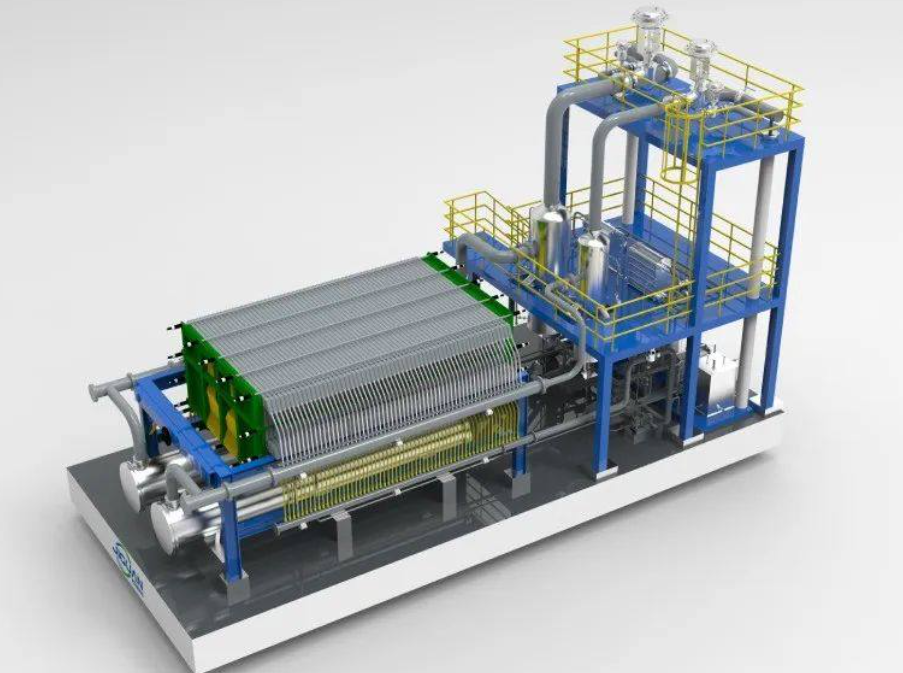
From basic chemical engineering to green energy: How can electrolytic cells become the "heart" and "bridge" of modern industry?
When electric current passes through water, it decomposes into hydrogen and oxygen – this fascinating experiment in high school textbooks is actually the common technological cornerstone of today’s two major tracks: billion dollar basic chemical engineering and trillion dollar green energy transformation. The industrial scale version of this experiment is the electrolytic cell.
It has been running steadily for over a century, producing essential raw materials for plastics, pharmaceuticals, and textiles every day; The other side is expanding at an unprecedented speed, hailed as the key to opening the door to the “hydrogen energy era”. This article will take you into the inner world of electrolytic cells and understand the same logic behind these two great industrial revolutions.
Cornerstone - How to "turn salt into gold" in the electrolytic cell of chlor alkali industry?
1. Chemical reactions: one equation, three major industries
The overall reaction equation of chlor alkali industry is simple and elegant: 2NaCl+2H ₂ O → 2NaOH+Cl ₂ ↑+H ₂ ↑. By electrolyzing saturated saline solution, we simultaneously obtained:
Chlorine gas: the backbone of modern organic chemistry, serving as the starting point for the production of PVC plastics, polyurethane, refrigerants, pesticides, and pharmaceuticals.
Caustic soda, also known as sodium hydroxide, is an indispensable basic raw material for industries such as papermaking, textiles, alumina smelting, and water treatment.
Hydrogen: can be used as a chemical raw material (for synthesizing hydrochloric acid, hydrogenation refining) or as a clean fuel.
2. Technical core: Ion exchange membrane method – the art of efficiency and purity
The mainstream ion membrane method today is a model of precision control.
Process flow: High purity refined brine enters the anode chamber, where chloride ions are oxidized into pure chlorine gas. Sodium ions (NaE) are driven by an electric field and pass through a selective perfluorosulfonic acid cation exchange membrane before entering the cathode chamber. At the same time, deionized water is electrolyzed at the cathode, generating hydrogen gas and hydroxide ions (OH ⁻). OH ⁻ is firmly blocked by the ion membrane in the cathode chamber and combines with the migrated Na ⁺ to form a high-purity caustic soda solution.
Why “heart”: This process produces two basic chemicals in one go, with high purity and high yield, with unparalleled efficiency. More than 90% of the world’s chlorine and a considerable proportion of alkali come from here. It can be said that without chlor alkali electrolysis cells, there would be no modern chemical industry system.
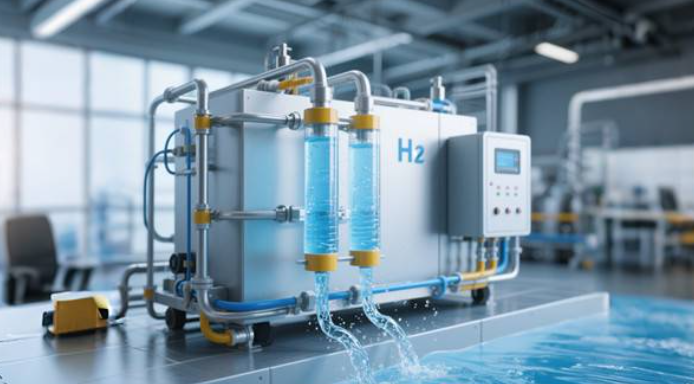
Bridge - How to "convert water into hydrogen" in electrolysis cells for hydrogen production through water electrolysis?
1. Core Mission: Revolution from “Grey Hydrogen” to “Green Hydrogen”
Currently, global hydrogen mainly comes from fossil fuels (natural gas, coal), and the production process is accompanied by significant carbon emissions, known as “grey hydrogen”. To obtain true ‘green hydrogen’, zero carbon must be achieved from the source. The equation 2H ₂ O → 2H ₂ ↑+O ₂ ↑ for hydrogen production through water electrolysis provides the ultimate answer: using clean electricity to decompose water produces only hydrogen and oxygen, with zero carbon emissions throughout the process.
Comparison and Future of Two Generations of Electrolytic Cells
Although both are called “electrolytic cells”, there are profound differences in goals and logic between chlor alkali electrolysis and water electrolysis:
| Ccomparative dimension | Chlor alkali industry electrolytic cell | Water electrolysis hydrogen electrolysis cell |
| Core objective | Co production of chlorine and alkali (economically driven) | Production of green hydrogen (driven by climate and energy security) |
| Product Status | Hydrogen is a valuable byproduct | Hydrogen is the only main product, oxygen is a by-product“ |
| Technology-oriented | Pursuing product purity, energy consumption, and membrane lifespan“ | Pursuing energy efficiency, fast start stop, and coupling with renewable energy |
| Historical role | The cornerstone of the industrial era“ | The Bridge and Engine of Carbon Neutrality Era |
Future symbiosis: The two are not in a substitutive relationship, but in a synergistic evolution. On the one hand, advances in water electrolysis technology, such as membrane materials and catalysts, can feed back into chlor alkali electrolysis, making it more efficient and energy-saving. On the other hand, the huge demand for green hydrogen will give rise to gigawatt level “electrolytic cell factories”, whose large-scale production will promote the maturity of the industrial chain and further reduce costs. In addition, the purification and utilization of hydrogen by-product from chlor alkali is also a practical hydrogen source supplement.
Conclusion: The same tool, the same future
The story of electrolytic cells, from salt to chips, from rainwater to rocket fuel, is about how humans use the most basic principles of physics to solve the most complex social needs through engineering technology – from building material civilization to reshaping the energy system.
Understanding an electrolytic cell is not just about understanding a technology. It is an understanding of how we use electricity to write the code of modern industry, and more importantly, an insight into how we can use the same tool to repair the environmental scars caused by past development and lead to a cleaner and more sustainable future. This industrial “heart” and energy “bridge” is delivering new power and hope to the world with unprecedented vitality.