Elastic pressure gauge Vacuum Pressure Gauge
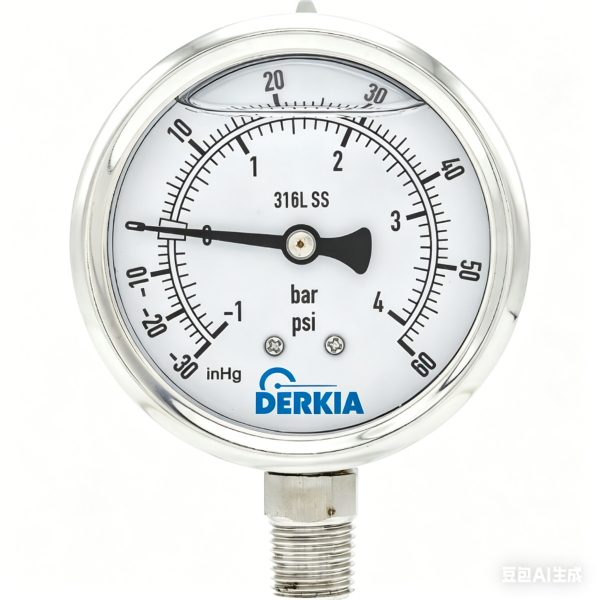
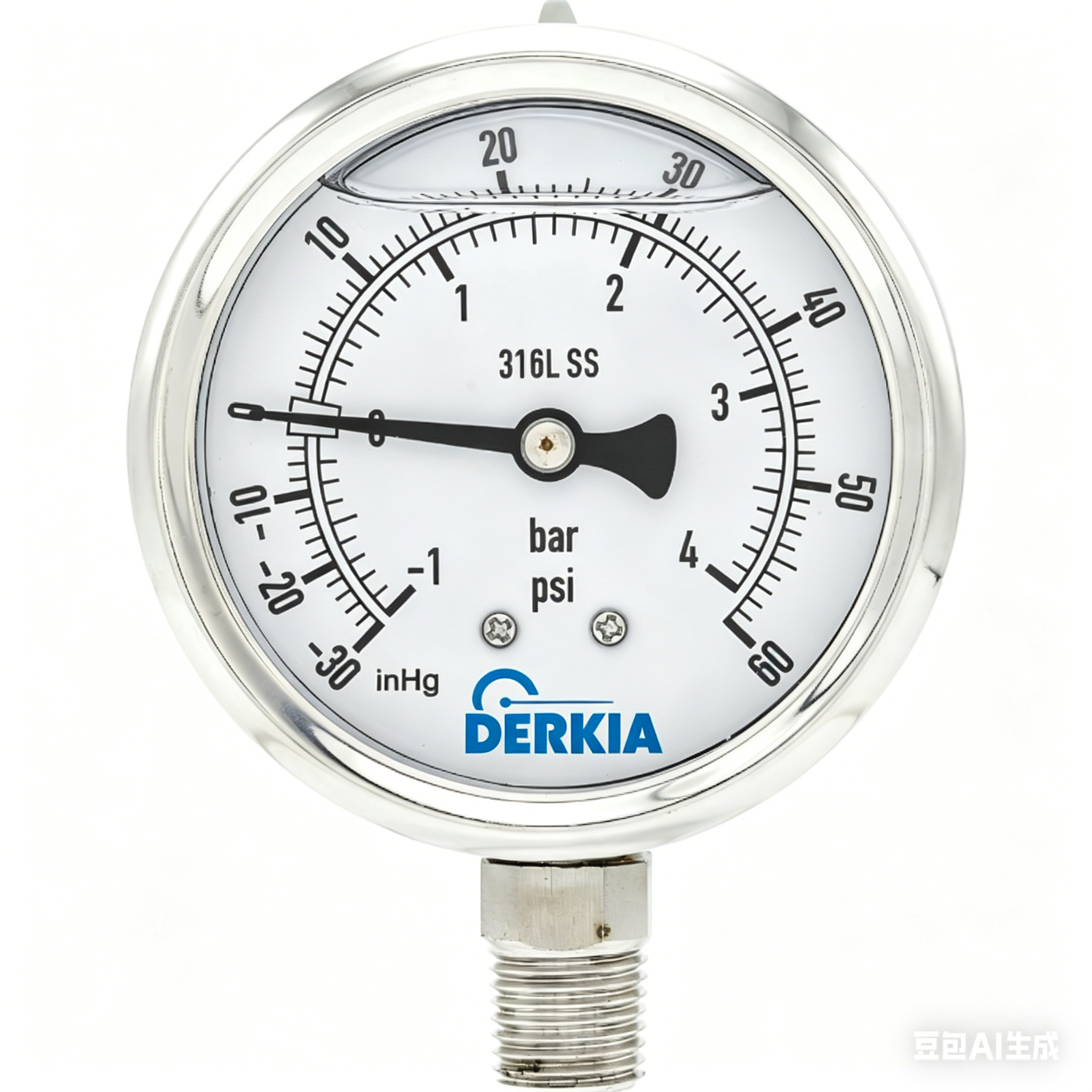
1. Product type: Compound Gauge vacuum pressure gauge. It can measure both positive and negative pressure (vacuum degree) simultaneously.
Shell material: 316L Stainless Steel. The dial is labeled with “316L SS”, which has excellent corrosion resistance and is suitable for use in harsh environments containing chemical media.
Connection method: The bottom has a threaded interface (which looks like 1/4 “or 3/8” NPT/M20 thread) for connecting pipes or equipment.
2. Scale Range
This watch adopts a dual scale design, which is convenient for customers with different habits to read:
Outer ring scale (psi):
Positive pressure range: 0~60 psi (pounds per square inch)
Negative pressure range: 0~-30 inHg (inches of mercury, vacuum degree)
Inner circle scale (bar):
Positive pressure range: 0~4 bar
Negative pressure range: 0~-1 bar
Accuracy level: Although not directly marked on the dial (usually 1.6 or 2.5 levels for this type of universal watch), its design conforms to industry standards
3. Applicable media and application scenarios
According to the general characteristics of Derkia products, this watch is suitable for:
Measurement medium: Non corrosive or weakly corrosive media, such as water, air, oil, gas (natural gas, liquefied gas), etc.
Application Scenario:
Oil and gas industry: Monitor the pressure or vacuum degree of low-pressure gas circuits.
Heating, Ventilation, and Air Conditioning (HVAC): Pressure monitoring of refrigerant pipelines.
Industrial process control: pressure inspection of compressed air systems and hydraulic systems.
Laboratory: Used as a universal vacuum gauge.
Because this meter can monitor both “leakage” and “filling volume” simultaneously, it is very common in the following types of projects:
1. Oil&Gas/LNG/CNG industry
This is the core application scenario of this type of instrument.
LNG/CNG Refueling Stations: When filling tank trucks or gas cylinders, negative pressure (vacuuming) and positive pressure (filling gas) are generated inside the pipeline. Workers need to use this table to confirm whether inflation is complete and whether there is any abnormal vacuum in the pipeline (which may indicate a leak).
Natural gas regulating stations: During the process of regulating gas pressure, it is necessary to monitor the pressure fluctuations and vacuum status of the pipeline network to prevent danger caused by negative pressure inhalation of air.
Well Testing&Hydrostatic Testing: When testing the sealing of a wellhead or conducting a hydrostatic test, it is necessary to observe the entire process from negative pressure to positive pressure to determine the status of valves and pipelines.
2. Refrigeration and HVAC/R projects
In systems involving refrigerants, pressure and vacuum are two extreme states.
Refrigerant Charging: When adding Freon to air conditioning, cold storage, or commercial refrigeration units, the system must first be evacuated (negative pressure) using a vacuum pump, and after confirming that there are no leaks, gaseous refrigerant (positive pressure) can be charged.
System Leak Testing: If an abnormal decrease in system pressure (turning into negative pressure) is detected during the refrigeration process, it indicates a refrigerant leak.
3. Chemical&Pharmaceutical Technology
Reactors&Tanks: During vacuum concentration, distillation, or drying processes, the pressure inside the reactor changes from atmospheric pressure to negative pressure. At the same time, there will be positive pressure flow during feeding or discharging.
Filters&Separators: In filtration operations, negative pressure drives fluid through the filter cartridge, while positive pressure represents clogged filter cake or abnormal flow rate.
4. Laboratory and research equipment
Vacuum Ovens: When creating a negative pressure environment by extracting internal air, real-time monitoring of the vacuum level is required; After turning off the vacuum pump, it is necessary to observe the positive pressure rise to determine the sealing performance.
Centrifuges and rotary evaporators: These devices require operation under negative pressure to reduce boiling point, while also having a positive pressure protection mechanism.
5. Maintenance of pneumatic and hydraulic systems
Vacuum Grippers: When grabbing flat objects such as glass and metal plates in industrial automation, the suction cups need to generate negative pressure suction first, and then restore positive pressure release after the handling is completed.
Vacuum Packaging Machine: When vacuuming inside the packaging bag, the gauge needle will point towards negative pressure; When inflating (such as adding nitrogen to prevent oxidation), the gauge needle will point to positive pressure.