The recent kidnapping allegations or related news between the United States and Venezuela, as well as the oil situation in Venezuela, have become a hot topic internationally. Today we will talk about the oil situation in Venezuela based on this news, and also discuss pressure gauges in conjunction with Venezuela’s oil situation.
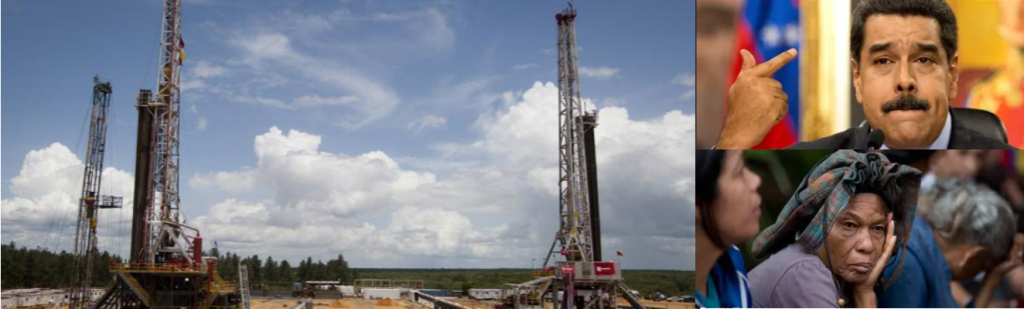
The oil situation in Venezuela is currently facing multiple severe challenges, which can be summarized as “abundant resources but deep crisis”. According to authoritative organizations such as the US Energy Information Administration (EIA) and OPEC, Venezuela has the largest proven oil reserves in the world, but its undeveloped reserves vary due to different definitions and evaluation standards. Venezuela’s’ unexplored oil ‘on paper amounts to hundreds of billions of barrels, but due to economic, technological, and geopolitical factors, the actual commercially exploitable amount is much lower than this figure. If the future political situation is stable, sanctions are relaxed, and international oil prices remain high, these resources may gradually be released. Otherwise, most reserves will remain dormant underground for a long time.
Venezuela’s oil resources are mainly composed of heavy crude oil and ultra heavy crude oil. Mainly heavy crude oil (API gravity<20 °), ultra heavy crude oil (API gravity<10 °), and some medium crude oil: traditional oil fields (such as the Maracaibo Lake area). The core characteristics of these crude oils are high sulfur content, high metal content, and dependence on diluents. High viscosity, poor fluidity, and high mining and refining costs. So there are many challenges in the mining process. For example, enhanced oil recovery technologies such as steam injection and horizontal drilling are required during the extraction process, but Venezuela lacks funding and technological upgrades, and outdated basic extraction equipment limits crude oil production. Venezuela’s oil fields, pipelines, and refining facilities have been lacking maintenance for many years, with frequent accidents such as fires and leaks. Restoring production capacity requires billions of dollars in investment, and the supply of electricity is unstable, with frequent power outages affecting production. The previous export market sanctions imposed by the United States on Venezuela have also resulted in restrictions on the amount of crude oil extracted and the upgrading of technological cooperation here. The main export targets are countries such as India, China, and Cuba, but with the impact of sanctions, traditional buyers of oil have also decreased.
Previously, some foreign-funded enterprises (such as Chevron and Repsol) participated in joint ventures, but due to political risks, the oil production capacity was far from ideal.
So although Venezuela has huge oil reserves, the quality is low and the difficulty of extraction is high. Political turmoil and sanctions have long left it facing the dilemma of being a resource rich country but difficult to transform wealth.
Above, we have learned about the oil extraction in Venezuela, especially in the Orinoco heavy oil belt. Due to the characteristics of the oil products here (ultra heavy, high viscosity, high sulfur content) and the special nature of the extraction process (often requiring steam assisted gravity drainage, diluent mixing, etc.), there are high requirements for pressure measuring instruments. The key considerations for selecting pressure gauges are to solve problems such as high viscosity, impurities, high temperature and high pressure environment, corrosiveness, and vibration resistance. We recommend the type and technical characteristics of pressure gauges
1. Diaphragm sealed pressure gauge
This type of gauge transmits pressure through an isolation diaphragm and filling liquid, avoiding direct contact between the medium and the instrument core, and preventing heavy oil from solidifying and blocking the pressure hole. If corrosion-resistant materials (such as Hastelloy and Monel film) are chosen to cope with hydrogen sulfide corrosion, adapt to high temperature environments, and protect instruments by extending heat dissipation pipes or filling them with high-temperature silicone oil. It can be used in the working process of wellhead pressure monitoring, transmission pipelines, and steam injection systems.
2. Seismic pressure gauge
This type of instrument is filled with damping fluid (such as glycerin or silicone oil) inside, which can buffer vibration and pulsating impact, and its pointer is stable, making it easy to read pressure values. It can be used in pump stations, compressor outlets, and vibration areas of drilling platforms.
3. Intelligent pressure transmitter (with remote monitoring)
This electronic sensor output signal (4-20mA or digital signal) can be integrated into the control system, characterized by high precision and remote real-time monitoring, making it very suitable for remote oil fields. The equipment has self diagnosis and temperature compensation functions. Can handle high temperatures such as extreme temperatures (-40 ℃~150 ℃). This instrument can be used in automated mining systems, deep-sea platforms, and oil fields that require centralized data management.
4. Explosion proof pressure gauge
To ensure safety in flammable gas environments such as wellheads and refining areas, it is necessary to use this explosion-proof pressure gauge. This instrument can be used for pressure monitoring in any hazardous area.
The complex environment of oil field development in Venezuela also has other suggestions for the selection of instruments and meters. For example, in terms of material selection for instruments, 316L stainless steel, Hastelloy alloy, ceramic coating, and resistance to hydrogen sulfide corrosion are suitable for the liquid receiving components of instruments. The material of the seal is suitable for choosing fluororubber (FKM) or polytetrafluoroethylene (PTFE), which are resistant to high temperatures and chemical corrosion. The range and accuracy of the selected instrument should cover 1.5 times the working pressure to avoid damage to pressure peaks. It is recommended that the accuracy be ≥ 1.0 level (industrial grade), and the key technical points need to be above 0.5 level. The instrument to be selected can regularly flush the isolation membrane to prevent the deposition of asphalt. Install condensation bends in high-temperature steam pipelines to protect instruments. If considering the mining environment as desert or marine, choose a protection level (such as IP65 or above for dust and water resistance).

Potential driving force for the United States to continue mining
Venezuela’s heavy oil can supplement the raw material demand of US refineries and reduce long-term dependence on crude oil from unstable regions such as the Middle East. However, the possibility of large-scale mining in the short term (1-3 years) is relatively low. The United States is more likely to maintain a “limited cooperation” model (such as allowing companies to recover debt or maintain basic operations) while observing the political trends in Venezuela.
At present, limited and conditional small-scale cooperation is more likely than a comprehensive return. Any major decision may require political compromise between the United States and Venezuela, and be subject to the attention and constraints of the international community (such as the European Union and Latin American countries).