The pipeline transportation of natural gas from gas wells to processing plants is called the “golden pressure range”, which accurately summarizes the core position of the pressure range of 1000-3000 Psi (about 70-207 bar) in natural gas gathering and transportation systems. The reason why it is called the “golden zone” is because it achieves a nearly perfect balance between technical feasibility, economic benefits, and system safety, and is a concentrated manifestation of engineering optimization.
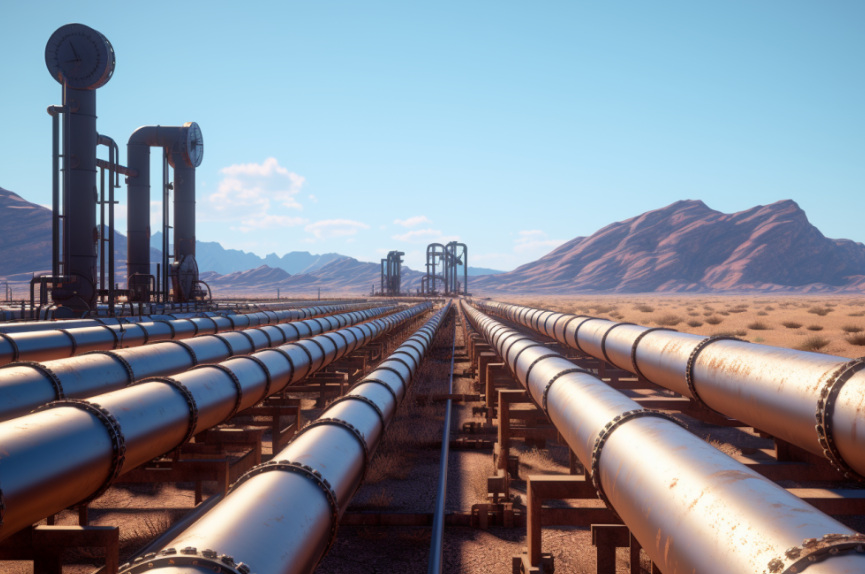
The design of pipeline transportation pressure for natural gas from gas wells to processing plants is in the range of 1000-3000 Psi (approximately 70-207 bar), based on a comprehensive consideration of a series of technical, economic, and safety factors.
Optimizing economic benefits - this is the core reason. The pressure design directly determines the sky high investment in pipeline construction.
1. The “exchange” relationship between pipe diameter and pressure: Under the premise of constant conveying capacity, increasing pressure can significantly reduce the required pipe diameter. The cost of pipelines (steel, welding, laying) is roughly proportional to the square of the pipe diameter. Raising the pressure from low pressure to this range can significantly save steel usage and construction costs, achieving the economy of “exchanging pressure for pipe diameter”.
2. Reduce the number of booster stations: A higher initial pressure means that gas can be transported over longer distances with its own energy, thereby reducing the number of booster stations along the way. The booster station not only has high construction costs, but also serves as a major cost center for later operation (energy consumption, maintenance).
3. Scale effect: This pressure range has been validated internationally for decades, with the most mature supply chain and standardized equipment. Valves, flanges, compressors, and other equipment are available in a wide range of options, with high output and relatively reasonable prices, avoiding the exorbitant costs associated with using ultra-high pressure special equipment.
Matching with gas source and terminal
The flow pressure at the wellhead of most conventional gas wells falls precisely within this range after passing through a throttle valve (which lowers the high pressure to a safe and controllable level). In this way, natural gas can enter the gathering and transmission pipeline network with almost no additional energy consumption, maximizing the utilization of geological energy.
Satisfying the “appetite” of processing plants: various towers, containers, and process equipment in natural gas processing plants (for desulfurization, dehydration, dehydrocarbon, etc.) need to operate efficiently under certain pressures. A pressure of 1000-3000 Psi can provide sufficient driving force for fluid to pass through complex processes and meet the pressure requirements for subsequent products (such as commercial gas) entering long-distance pipelines, making it an ideal process feed pressure.
Mature technology and security
Under this pressure, high-strength microalloyed steel with highly mature materials and processes (such as X60, X70, X80 grades) can be used. These steels have a complete set of international standards (such as API, ISO) and rich engineering experience in smelting, pipe making, welding, and testing, with extremely high reliability and controllable risks.
A safety margin will be left at the maximum operating pressure during design. Within this range, an increase in safety margin will not result in a significant increase in costs. Once entering the ultra-high pressure (such as>5000 Psi) field, for safety reasons, the wall thickness, sealing level, and inspection requirements of equipment and pipelines will sharply increase, resulting in a steep cost curve.
The consequences of accidents can be relatively controlled. Although high pressure itself is a risk source, the risks in this area have been studied for a long time and have a sound prevention and control system. If the pressure is even higher, once a leak or rupture occurs, the intensity of the jet fire, the range of impact, and the difficulty of control will all increase nonlinearly.
Develop system flexibility and adaptability
Adapting to most geological conditions: Whether it is conventional onshore gas fields, tight gas fields, or some offshore gas fields, their production pressure can be well integrated into this pressure system after adjustment.
Easy pressure grading management: The entire gathering and transmission network can be designed as a pressure grading system (for example, 2500 Psi for wellhead branch lines, 2000 Psi for gas gathering trunk lines, and 1500 Psi for treatment plant inlets). This gradient design can optimize the efficiency of each pipeline section and flexibly control it through pressure regulating valves, adapting to the natural decrease of gas well pressure with production time.
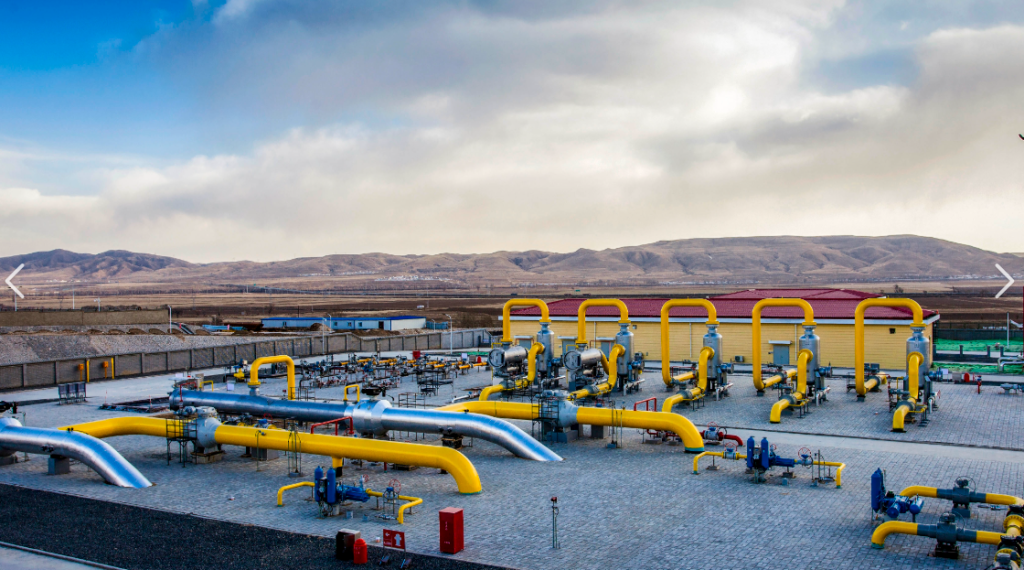
Deviation from the 'golden zone' of this pressure may come at a huge cost:
1. Low pressure: It is necessary to lay extremely thick pipelines (cost explosion) or densely build booster stations (operating cost explosion), which has extremely poor economic efficiency.
2. Excessive pressure: Entering the field of “special transportation”, every component (pipeline, valve, instrument) becomes a specially made product, and the cost rises sharply. The complexity and cost of safety risk management also increase exponentially.
Therefore, the “golden pressure range” is the optimal solution found by the natural gas industry after a century of development, through countless projects of practice and optimization, at the intersection of engineering, materials science, economics, and safety science. Its proven highest cost-effectiveness and high reliability pressure bandwidth are the cornerstone of large-scale, efficient, and safe operation in the modern natural gas industry.