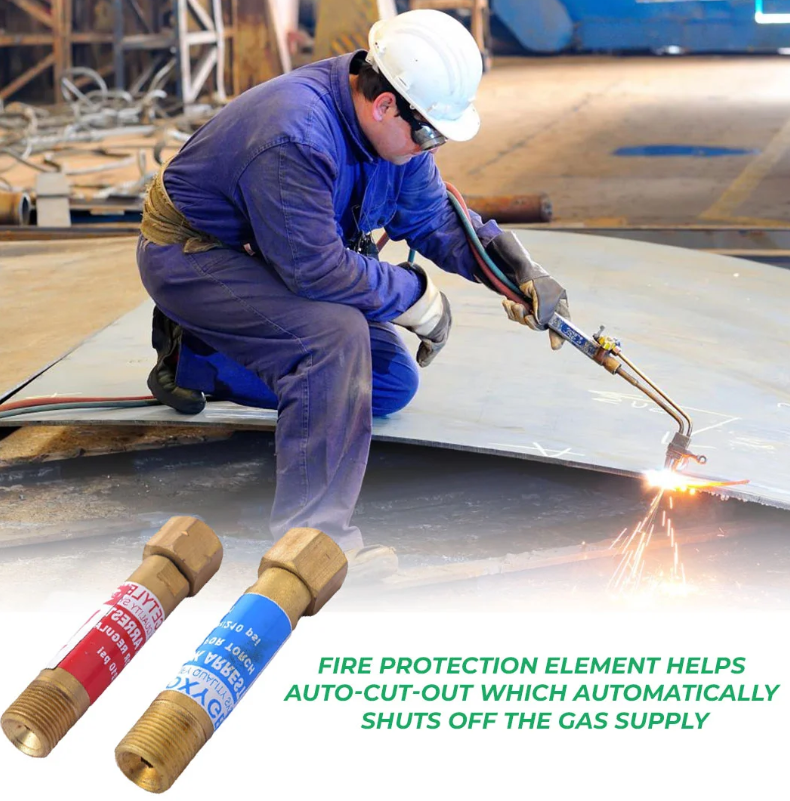
Avoiding “flashback”: deadly counterattacks and comprehensive defense strategies in welding and cutting operations. Behind the scorching stage of welding and gas cutting operations lies a momentary but devastating threat – tempering. It is not an ordinary flame, but a catastrophic phenomenon of mixed gases burning in reverse inside hoses or equipment, often accompanied by sharp hissing or explosion sounds, and may cause equipment to explode and trigger fires. Understanding and preventing tempering is a safety cornerstone that every worker engaged in hot cutting and welding operations must master.
How does flashback occur?
The essence of flashback is that the flame burning speed exceeds the spraying speed of the mixed gas, causing the flame to spread in the opposite direction along the welding torch channel. The common causes include:
1. Gas pressure imbalance: Improper pressure ratio between fuel gas and oxygen, or severe pressure fluctuations.
2. Channel blockage: The welding and cutting nozzle is blocked due to splashes, carbon deposits, or overheating, causing airflow obstruction.
3. Equipment leakage or damage: hose aging and cracking, loose joints, resulting in air being sucked into the system to form explosive premixed gas.
4. Improper operation: Incorrect ignition/shutdown sequence, nozzle too close to workpiece causing overheating, etc.
A flashback process may only be completed in one tenth of a second, but it is enough to destroy welding and cutting torches, burn hoses, and even cause gas cylinder explosions.
Correct equipment setup and maintenance
1. Pressure and flow rate: Strictly follow the gas working pressure specified by the equipment manufacturer to ensure that the gas and oxygen pressures are matched and stable. Use a pressure reducer with good performance.
2. Hose management: Use specialized welded hoses and ensure that they are intact and free of grease. Properly secure and avoid tangling, crushing, or contact with high-temperature surfaces.
3. Welding and cutting torch status: Regularly clean and replace the welding and cutting nozzle to prevent blockage. Check if the torch valve is well sealed.
Safe operating procedures
Safe operating procedures
Standard ignition and shutdown procedures:
Ignition: First turn on the gas slightly, then slowly adjust the oxygen to the desired flame after ignition.
Turn off the engine: first close the gas valve, then close the oxygen valve.
Maintain a safe distance: Avoid excessive contact between the mouth and the workpiece to prevent overheating.
Be vigilant at all times: pay attention to listening to the sound of the airflow to see if it is normal, and observe if the flame state is stable.
The Last Fortress of Protection: an irreplaceable backfire preventer
Even the strictest operations cannot completely eliminate the risk of tempering. Therefore, installing qualified flashback arresters in the gas supply system is the most critical and final technical line of defense for protecting life and equipment.
The flashback preventer is usually installed between the outlet of the pressure reducer and the hose, or between the hose and the welding torch. Its working principle is based on two core mechanisms:
Mechanical check: Built in one-way valve to prevent gas from flowing in the opposite direction.
Quenching flame retardant: When the flame breaks through the check valve, its internal metal flame retardant components (such as sintered stainless steel mesh) will quickly absorb heat, reducing the flame temperature to below the gas ignition point and completely extinguishing it.
Notice:
Must be used in pairs: dedicated flashback arresters must be installed separately on the oxygen and gas pipelines.
Non disposable equipment: Tempering arresters require regular inspection, testing, and maintenance. Especially after experiencing a tempering impact, it must be repaired or replaced by professional personnel and must not be continued to be used.
Performance guarantee: Ensure that the tempering preventer used complies with national or international safety standards.
Emergency plan for accidents caused by backfire
Immediate action: Immediately close the gas valve on the welding and cutting torch, cut off the gas source (this is the most critical step), and then close the oxygen valve.
Close the main valve of the gas cylinder: If possible, then close the main valve of the gas cylinder.
Inspection and reporting: Mark the equipment that has experienced tempering (especially the tempering preventer) as unusable and report it to the safety officer for professional maintenance.
Do not take chances: never re ignite without checking the cause and replacing any potentially damaged safety devices.
Conclusion
The risk of tempering in welding and cutting operations does not rely on a single measure to prevent tempering, but rather on building a deep defense culture from standardized operation to equipment maintenance, and then to installing reliable tempering arresters. Only by installing the correct safety equipment, strictly following operating procedures, and maintaining a constant sense of awe can we ensure that the blazing flame we use burns only in its rightful place, safeguarding the safety of every operator and workplace.
https://www.derkia.com/product-category/backfire-preventer-parts/DERKIA provides reliable flashback arrestor products